







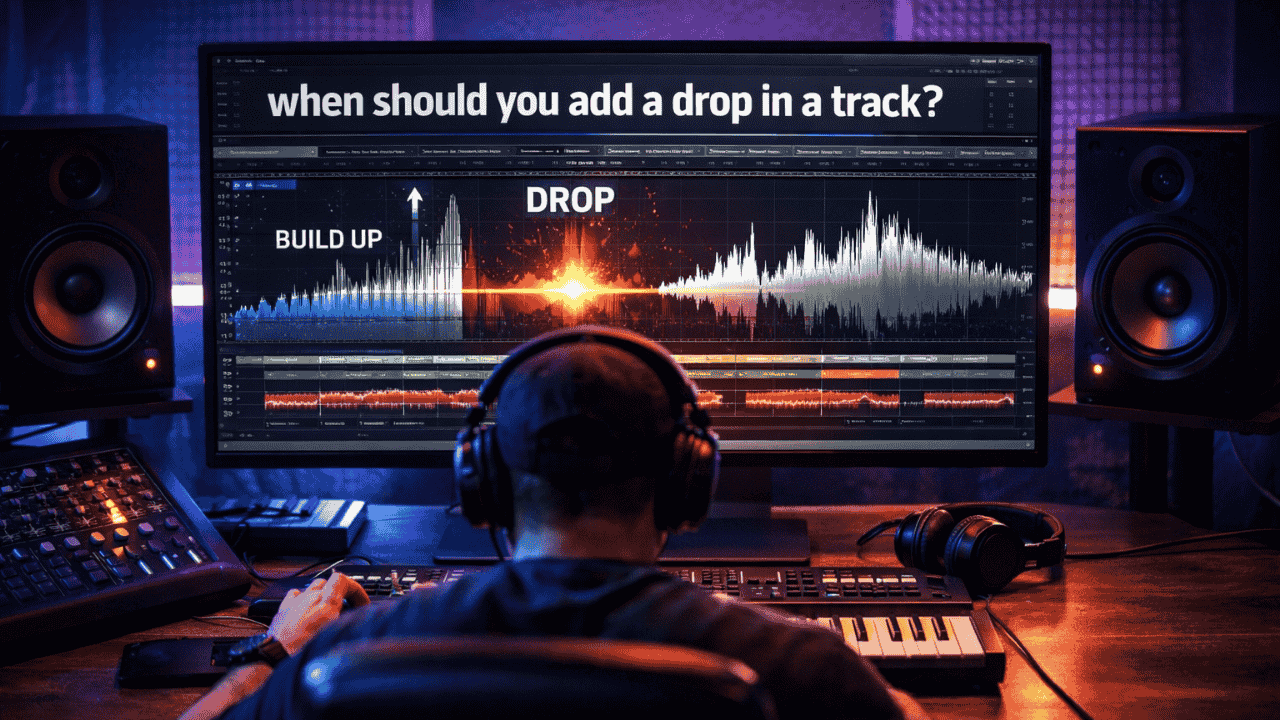
Electronic music thrives on tension and release. One moment the track pulls the listener into a build of rhythm and melody, and the next moment everything explodes into energy. That moment is the drop. Producers spend a lot of time learning arrangement, sound design, and mixing, but one question always appears during production: when should you add a drop in a track.
The answer is rarely about a strict rule. Timing the drop depends on the genre, the energy you want to create, and how the arrangement builds anticipation. A well-placed drop can turn a simple beat into a memorable track, while a poorly timed one can break the flow.
Understanding when should you add a drop in a track requires looking at structure, listener psychology, and common patterns used in modern electronic music.
understanding the role of the drop in a track
A drop is the moment when the buildup releases into the main groove or hook of the song. It often follows a rising build section filled with tension, sweeps, drum rolls, or filtered melodies.
The drop works because it creates contrast. Before the drop, the track usually strips back elements or builds pressure through sound design. After the drop, the full rhythm and bass return.
When producers ask when should you add a drop in a track, they are really asking how to control energy and attention.
The drop often includes:
- the main bassline
- the strongest drum pattern
- the central melody or synth hook
- heavier sound design elements
Without contrast, the drop loses its impact.
the typical structure of electronic music
To understand when should you add a drop in a track, it helps to know the common arrangement used in electronic music. Many dance tracks follow a predictable timeline that helps DJs mix them smoothly.
A typical structure looks like this:
Intro – 0:00 to 0:30
Build up – 0:30 to 1:00
First drop – around 1:00
Breakdown – 1:30 or 2:00
Second build – shortly after
Second drop – around 2:30 or 3:00
Outro – final section
This structure is not mandatory, but it gives a starting point for producers learning when should you add a drop in a track.
For club music, placing the drop around the one-minute mark works well because it keeps listeners engaged without waiting too long.
why anticipation matters before the drop
The drop only feels powerful if the listener expects something to happen. This expectation builds during the section before the drop.
Producers create anticipation in several ways:
- gradually adding percussion layers
- increasing pitch with risers
- filtering sounds to slowly reveal frequencies
- adding snare rolls or drum fills
These techniques signal that something big is coming. If you are wondering when should you add a drop in a track, pay attention to how long the buildup lasts.
Too short and the drop feels rushed.
Too long and the listener loses interest.
Most producers keep buildup sections between 8 and 16 bars.
how genre influences drop timing
Different genres place the drop at different moments in the track. If you are deciding when should you add a drop in a track, genre conventions can guide you.
EDM festival tracks often delay the drop to create a dramatic payoff.
House music tends to introduce the groove earlier so DJs can mix tracks easily.
Dubstep often builds tension with heavy sound design before a powerful bass drop.
Examples of common timing:
House music
Drop often appears around 45–60 seconds.
Dubstep
Drop usually lands around 50–70 seconds.
Future bass
Drops may appear earlier but rely on melodic impact.
Trap
Drops sometimes hit quickly after a short intro.
These patterns exist because audiences expect certain structures.
signs that your track is ready for a drop
Many beginner producers struggle because they do not recognize the moment when the arrangement feels ready.
Here are clear signs the track has reached the drop point.
Energy has been building for several bars
Percussion layers are increasing
Risers or sweeps are reaching their peak
The rhythm briefly pauses or removes elements
These signals tell the listener that the drop is about to happen.
If you are unsure when should you add a drop in a track, listen carefully to the energy curve of your arrangement. The drop should arrive when tension is strongest.
common buildup techniques before the drop
Producers rely on specific techniques to prepare the listener before the drop.
Some of the most effective include:
snare rolls that speed up gradually
white noise risers
pitch risers on synths
reverse cymbals leading into the drop
drum fills in the final bar
Another popular trick is the pre-drop pause. Everything stops for a brief moment before the drop hits.
That silence creates a dramatic release.
These techniques help answer when should you add a drop in a track because they naturally guide the arrangement toward the release point.
balancing patience and excitement
A drop placed too early can feel weak because the listener has not experienced enough tension. On the other hand, delaying the drop too long risks losing attention.
Finding the right balance is one of the most important creative decisions in production.
Consider these guidelines:
- intros should not drag too long
- buildup sections should feel intentional
- the drop should arrive before the listener becomes impatient
When producers debate when should you add a drop in a track, they are really balancing anticipation and satisfaction.
A well-timed drop keeps listeners engaged and excited.
using drops to shape the entire arrangement
Drops are not isolated moments. They shape the structure of the entire track.
Many songs include two major drops. The first introduces the main idea, while the second increases intensity.
For example:
First drop
Introduces the main groove and bassline.
Second drop
Adds new elements such as extra drums, variations in melody, or stronger sound design.
Planning multiple drops can help producers decide when should you add a drop in a track during the overall arrangement.
The second drop should usually feel bigger than the first.
mistakes producers make with drops
Even experienced producers sometimes struggle with drop placement.
Common mistakes include:
placing the drop too early
building tension for too long
using the same drop twice without variation
overcrowding the drop with too many sounds
Another mistake happens when the drop does not match the buildup. If the buildup suggests something intense but the drop feels weak, the track loses impact.
Understanding when should you add a drop in a track also means making sure the drop delivers the energy promised by the buildup.
listening and referencing professional tracks
One of the easiest ways to learn timing is by studying professional tracks.
Load a reference track in your DAW and observe:
- where the drop occurs in the timeline
- how long the buildup lasts
- how the energy changes before and after the drop
This simple analysis can quickly teach you when should you add a drop in a track within your own music.
Professional producers rarely place drops randomly. They carefully design the arrangement around them.
trusting your creative instinct
Structure guidelines help, but music is still creative expression. Sometimes the best drop arrives in an unexpected place.
While learning when should you add a drop in a track, do not rely only on formulas. Listen to how the track feels.
If the energy naturally rises and demands release, that is usually the right moment.
Producers often say the track tells you when the drop should happen.
conclusion
Timing the drop is one of the most important decisions in music production. The drop creates the emotional payoff that listeners remember, especially in electronic and dance music.
Knowing when should you add a drop in a track requires understanding buildup, genre conventions, and energy flow. Most tracks place the first drop around the one-minute mark, but the exact timing depends on how tension builds before it.
A good drop follows a clear buildup, delivers a strong rhythm or hook, and fits naturally within the arrangement. Producers who study structure, analyze professional tracks, and trust their instincts gradually develop a strong sense of timing.
When you learn when should you add a drop in a track, your arrangements become more dynamic, engaging, and memorable.
faqs
what is a drop in music production
A drop is the moment in a track where the buildup releases into the main beat, bassline, or hook, creating a surge of energy.
when should you add a drop in a track during a song
Most electronic tracks place the first drop between 45 seconds and one minute after the intro and buildup.
how long should a buildup be before the drop
Buildup sections usually last between 8 and 16 bars depending on the tempo and style of the track.
can a track have more than one drop
Yes. Many songs include two or even three drops to keep the arrangement interesting and maintain energy throughout the track.
what makes a drop powerful
A powerful drop relies on strong contrast, a clear buildup, impactful drums or bass, and a memorable melody or hook.